
Is kratom legal in the US? The answer isn’t as straightforward as you might expect. While kratom remains federally legal across the United States, a patchwork of state and local laws creates a complex web of regulations that varies dramatically from one jurisdiction to another. Understanding these nuances could be the difference between legal compliance and serious legal consequences.
The legal landscape surrounding kratom in America remains one of the most confusing and rapidly changing areas of botanical law. While millions of Americans use kratom daily for various purposes, many consumers find themselves asking a critical question that could determine whether their next purchase lands them in legal trouble or provides the relief they seek.
- Federal Status: Kratom remains federally legal in the United States, with no DEA scheduling despite ongoing regulatory discussions
- State Variations: Six states have completely banned kratom, while others have implemented age restrictions or regulatory frameworks
- Local Laws Matter: Cities and counties can impose their own kratom restrictions, even in states where it’s legal
- Regulatory Evolution: Kratom laws continue to evolve rapidly, making it essential to stay informed about current regulations
- Quality Concerns: Legal status often correlates with product quality standards and consumer protection measures
Understanding Federal Kratom Regulations
Current Federal Legal Status
At the federal level, is kratom legal in the US remains a definitive yes. The Drug Enforcement Administration (DEA) has not scheduled kratom under the Controlled Substances Act, meaning it’s not classified alongside substances like marijuana, cocaine, or heroin. This federal legal status allows for interstate commerce and provides a foundation for the kratom industry to operate.
The Food and Drug Administration (FDA), however, maintains a different stance. While the FDA cannot make kratom illegal, they have issued warning letters to kratom vendors and have expressed concerns about kratom’s safety profile. The FDA’s position focuses on preventing kratom companies from making medical claims rather than pursuing outright prohibition.
Federal Agencies and Kratom Oversight
Multiple federal agencies monitor kratom differently:
- DEA: Monitors for potential scheduling but has taken no action since 2016
- FDA: Regulates kratom as a dietary ingredient and monitors safety reports
- USDA: Oversees kratom imports and agricultural aspects
- Customs and Border Protection: Manages kratom importation procedures
State-by-State Kratom Legal Analysis
States Where Kratom Is Completely Banned
Currently, six states have implemented complete kratom bans, making possession, sale, and use illegal:
| State | Ban Year | Penalties | Notes |
|---|---|---|---|
| Alabama | 2016 | Misdemeanor to felony | Strictest enforcement |
| Arkansas | 2016 | Class D felony | High penalties |
| Indiana | 2014 | Class A misdemeanor | First state ban |
| Rhode Island | 2017 | Misdemeanor | Limited enforcement |
| Vermont | 2016 | Civil violation | Lowest penalties |
| Wisconsin | 2014 | Class H felony | Severe consequences |
Understanding why is kratom legal in the US at federal level but banned in these states reveals the complex nature of American drug policy, where states maintain significant autonomy over controlled substance regulations.
States with Age Restrictions and Regulations
Several states have chosen regulation over prohibition, implementing frameworks similar to those governing tobacco or alcohol:
Nevada: Requires vendors to register and prohibits sales to minors under 18
Utah: Implements the Kratom Consumer Protection Act with quality standards
Georgia: Restricts sales to adults 18 and older
Illinois: Age restriction to 18+ with labeling requirements
For specific information about kratom regulations in Utah, consumers should understand both state and local ordinances.
Fully Legal States with No Restrictions
The majority of US states maintain no specific kratom regulations, allowing adult consumers to purchase, possess, and use kratom products freely. These states include major markets like California, Texas, Florida, and New York, representing the largest portion of America’s kratom consumer base.
Local and Municipal Kratom Laws
City and County Regulations
Even in states where is kratom legal in the US question receives a positive answer, local municipalities can impose additional restrictions. Notable examples include:
San Diego, California: Banned kratom despite state-level legality
Jerseyville, Illinois: Local prohibition in a legal state
Sarasota County, Florida: Restricts kratom sales and possession
Understanding Local Law Variations
Local kratom laws often arise from:
- Public health concerns raised by local officials
- Pressure from law enforcement agencies
- Community advocacy for or against kratom
- Economic considerations for local businesses
Consumers must research both state and local regulations before purchasing or using kratom products.
The Kratom Consumer Protection Act Movement

What Is the KCPA?
The Kratom Consumer Protection Act represents a regulatory framework designed to ensure product quality while maintaining legal access. States adopting KCPA-style legislation typically include:
- Age restrictions (usually 18+)
- Product testing requirements for contaminants
- Labeling standards with clear ingredient lists
- Registration requirements for vendors
- Prohibited additives lists
States Considering KCPA Legislation
Multiple states are evaluating KCPA-style frameworks, recognizing that regulation may be preferable to prohibition. This approach addresses safety concerns while preserving consumer access to quality kratom products.
When consumers ask is kratom legal in the US, KCPA states represent the gold standard for balanced kratom policy that protects both consumers and the industry.
Factors Influencing Kratom Legality
Public Health Considerations
State decisions about kratom legality often center on public health data:
- Safety profiles from medical literature
- Adverse event reports to health departments
- Emergency room visits potentially related to kratom
- Addiction treatment professional opinions
Economic Impact Factors
The kratom industry’s economic influence affects legislative decisions:
- Tax revenue from kratom sales
- Job creation in retail and distribution
- Small business opportunities
- Tourism impact in kratom-friendly states
Law Enforcement Perspectives
Police and prosecutors often influence kratom policy through:
- Resource allocation concerns
- Public safety priorities
- Enforcement difficulty assessments
- Community policing strategies
Quality and Safety in Legal Kratom Markets
Benefits of Legal Kratom Markets
States where is kratom legal in the US with proper regulation typically see:
Better Product Quality: Legal markets encourage testing and quality control
Consumer Education: Legitimate vendors provide accurate product information
Safety Standards: Regulated markets reduce contaminated products
Economic Benefits: Legal sales generate tax revenue and jobs
For consumers seeking high-quality kratom products, legal markets with proper oversight provide the safest options.
Risks in Unregulated Markets
Areas with kratom bans or minimal oversight may experience:
- Contaminated or adulterated products
- Inaccurate labeling and potency claims
- Higher prices due to legal risks
- Limited consumer recourse for problems
Kratom Industry Response to Legal Challenges
Self-Regulation Efforts
The kratom industry has implemented various self-regulation measures:
American Kratom Association (AKA): Advocates for reasonable regulation
Good Manufacturing Practices (GMP): Voluntary quality standards
Third-Party Testing: Independent laboratory verification
Vendor Certification Programs: Industry-led quality assurance
Advocacy and Education
Industry groups focus on:
- Educating lawmakers about kratom science
- Promoting responsible use guidelines
- Supporting research initiatives
- Combating misinformation campaigns
Companies like Wild Kratom exemplify industry efforts toward quality and compliance in legal markets.
International Perspectives on Kratom Legality

Global Kratom Regulations
Understanding how other countries approach kratom provides context for US policy:
Thailand: Recently legalized kratom after decades of prohibition
Malaysia: Considering legalization despite current bans
European Union: Varies by country, with some allowing kratom
Canada: Legal with some provincial restrictions
Lessons from International Models
International experiences suggest that:
- Prohibition often fails to eliminate kratom use
- Regulation can address safety concerns effectively
- Economic benefits encourage policy reconsideration
- Cultural factors significantly influence acceptance
Future Outlook for Kratom Legality
Trends Toward Regulation
Current trends suggest movement toward regulation rather than prohibition:
Scientific Research: Increasing peer-reviewed studies
Medical Interest: Growing physician awareness
Consumer Advocacy: Organized user communities
Economic Pressure: Industry growth and tax potential
Potential Federal Developments
Federal kratom policy may evolve through:
- Congressional legislation establishing national standards
- FDA guidance documents for industry compliance
- DEA scheduling decisions (positive or negative)
- Interstate commerce considerations
The question is kratom legal in the US may eventually receive more uniform answers as federal policy develops.
Staying Informed About Kratom Laws
Resources for Current Information
Consumers should monitor:
- State legislature websites for pending bills
- Local government meeting minutes
- Industry association updates
- Legal news sources covering drug policy
Best Practices for Consumers
To navigate kratom legality safely:
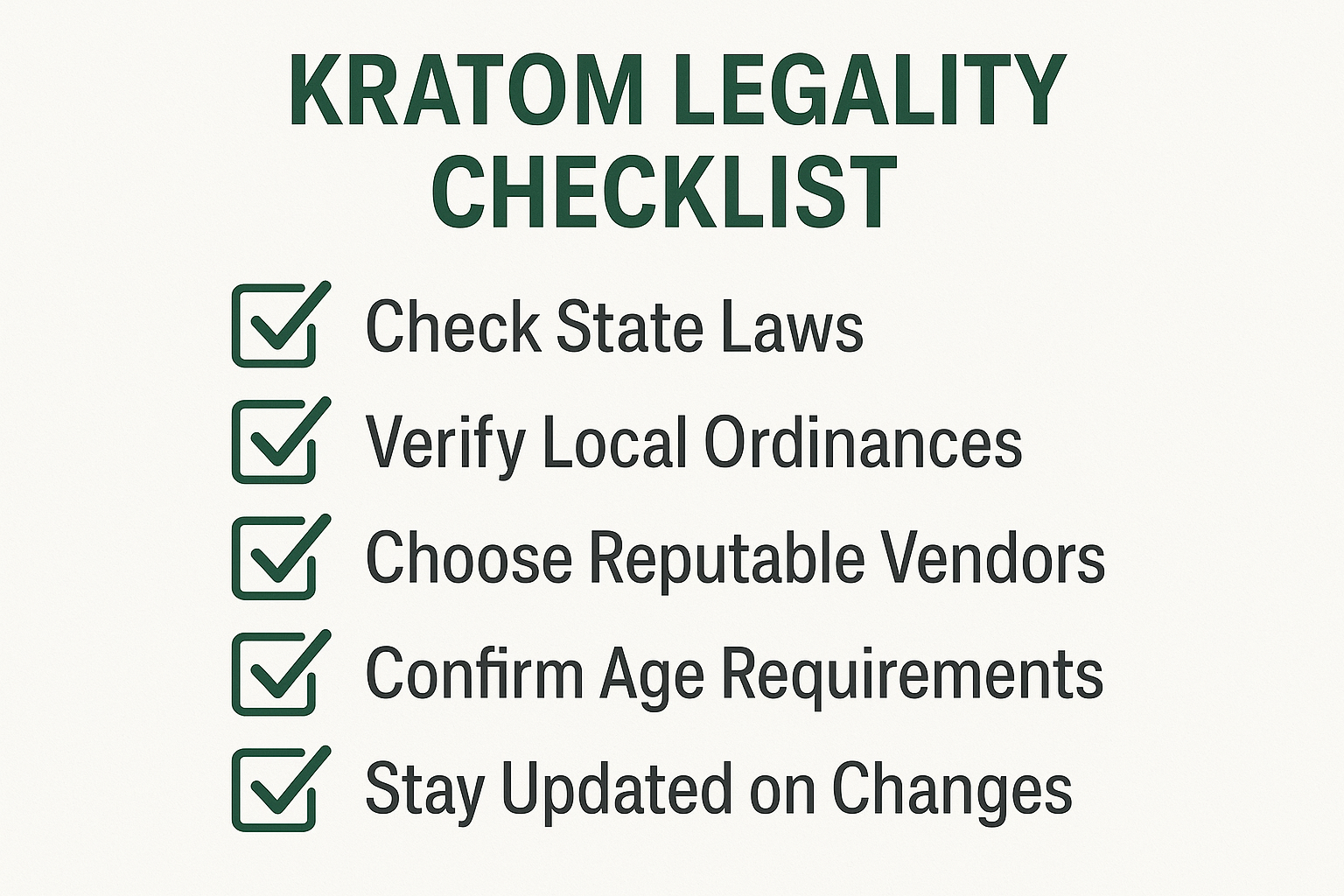
- Research Local Laws: Check both state and municipal regulations
- Choose Reputable Vendors: Select companies prioritizing compliance
- Stay Updated: Monitor legal developments regularly
- Practice Responsible Use: Follow recommended guidelines
- Support Advocacy: Engage with policy discussions constructively
For those interested in different kratom varieties, understanding legal access remains crucial for making informed choices.
🗺️ US Kratom Legality Checker
Consumer Safety and Legal Compliance
Choosing Legal Kratom Sources
When is kratom legal in the US in your area, selecting reputable vendors becomes crucial for both safety and legal compliance. Quality vendors typically provide:
- Third-party lab testing results for purity
- Clear labeling with accurate ingredient information
- Age verification systems for online purchases
- Compliance documentation with local regulations
Consumers seeking bulk kratom purchases should prioritize vendors demonstrating clear legal compliance and quality standards.
Understanding Product Quality Standards
Legal kratom markets often maintain higher quality standards through:
Contamination Testing: Screening for heavy metals, pesticides, and pathogens
Potency Verification: Confirming alkaloid content accuracy
Adulteration Prevention: Ensuring pure kratom without synthetic additives
Storage Standards: Proper handling and storage procedures
Safe Usage Practices
Regardless of legal status, responsible kratom use involves:
- Following recommended dosage guidelines
- Understanding potential interactions with medications
- Monitoring personal response and tolerance
- Seeking medical advice when appropriate
For guidance on safe kratom usage frequency, consumers should consult reliable educational resources and healthcare providers.
The Role of Advocacy in Kratom Legality

Consumer Advocacy Organizations
Several organizations work to maintain and expand kratom access:
American Kratom Association (AKA): The largest kratom advocacy group
Botanical Education Alliance: Focuses on educational initiatives
Kratom Trade Association: Represents industry interests
Local advocacy groups: State and regional organizations
Effective Advocacy Strategies
Successful kratom advocacy typically includes:
- Scientific evidence presentation to lawmakers
- Personal testimony from kratom users
- Economic impact data for local communities
- Regulatory alternatives to prohibition
Supporting Kratom Access
Consumers can support kratom legality through:
- Contacting legislators about kratom issues
- Participating in public hearings and comment periods
- Supporting advocacy organizations financially or through volunteering
- Educating others about kratom science and safety
- Practicing responsible use to maintain positive public perception
Kratom Research and Legal Implications
Current Scientific Understanding
Growing research helps answer is kratom legal in the US questions by providing evidence-based policy guidance:
Pharmacological Studies: Understanding kratom’s mechanisms of action
Safety Research: Evaluating potential risks and benefits
Epidemiological Data: Tracking real-world usage patterns
Clinical Trials: Testing kratom’s therapeutic potential
Research Impact on Policy
Scientific evidence influences kratom legality through:
- Informing regulatory agency decisions
- Supporting evidence-based legislation
- Countering prohibition arguments
- Establishing safety profiles
Future Research Directions
Ongoing research priorities include:
- Long-term safety studies
- Therapeutic application investigations
- Addiction potential assessments
- Quality standardization research
Economic Considerations of Kratom Legality
Market Size and Growth
The legal kratom market represents significant economic activity:
Market Value: Estimated in hundreds of millions annually
Job Creation: Thousands of direct and indirect positions
Tax Revenue: Substantial state and local tax generation
Small Business: Numerous independent retailers and vendors
Economic Arguments for Legality
Policymakers consider economic factors when determining whether is kratom legal in the US should remain affirmative:
- Tax revenue generation potential
- Job creation in retail and distribution
- Small business development opportunities
- Reduced law enforcement costs
Cost of Prohibition
Kratom bans impose economic costs through:
- Law enforcement resource allocation
- Court system burdens
- Lost tax revenue opportunities
- Underground market development
International Trade and Kratom Legality
Import and Export Considerations
Kratom’s legal status affects international commerce:
Import Regulations: FDA oversight of kratom imports
Quality Standards: International supplier requirements
Trade Relationships: Diplomatic considerations with kratom-producing countries
Economic Impact: Effects on Southeast Asian economies
Global Market Trends
International kratom markets influence US policy through:
- Pricing pressures from global supply
- Quality standards harmonization
- Regulatory model sharing
- Trade agreement considerations
Technology and Kratom Legal Compliance

Digital Age Challenges
Modern technology creates new legal considerations:
Online Sales: Interstate commerce complications
Age Verification: Digital identity confirmation requirements
Payment Processing: Banking industry kratom policies
Social Media: Advertising restriction compliance
Compliance Technology Solutions
Technology helps address legal compliance through:
- Automated age verification systems
- Geographic restriction software
- Compliance tracking databases
- Quality assurance documentation platforms
Companies like those offering Green Borneo kratom must navigate these technological compliance requirements in legal markets.
Medical Professional Perspectives on Kratom Legality
Healthcare Provider Attitudes
Medical professionals increasingly influence kratom policy through:
Clinical Experience: Direct patient interaction insights
Safety Assessments: Professional risk-benefit evaluations
Treatment Integration: Incorporating kratom into care plans
Policy Recommendations: Professional organization positions
Medical Education and Kratom
Healthcare education increasingly includes kratom topics:
- Pharmacology training updates
- Patient counseling guidelines
- Safety monitoring protocols
- Legal compliance education
Patient-Provider Communication
Open dialogue about kratom use becomes important when is kratom legal in the US receives positive answers, enabling:
- Honest usage disclosure
- Safety monitoring
- Drug interaction screening
- Treatment optimization
Frequently Asked Questions About Kratom Legality
Yes, kratom is currently legal at the federal level in the United States. The DEA has not classified kratom as a controlled substance, though they have considered doing so in the past. However, the FDA has issued warnings about kratom and does not approve it for medical use.
Several states have completely banned kratom, including:
- Alabama – Banned since 2016
- Arkansas – Banned since 2016
- Indiana – Banned since 2014
- Rhode Island – Banned since 2017
- Vermont – Banned since 2016
- Wisconsin – Banned since 2014
Always check current local laws as regulations can change.
Yes, many states that allow kratom have implemented age restrictions. Most commonly, you must be 18 or 21 years old to purchase kratom. Some states with the Kratom Consumer Protection Act require buyers to be at least 18 years old, while others set the minimum age at 21.
The Kratom Consumer Protection Act (KCPA) is legislation that regulates kratom sales while keeping it legal. It establishes quality standards, age restrictions, labeling requirements, and prohibits adulterated products. States like Utah, Nevada, and Georgia have passed versions of this act.
Yes, local jurisdictions can often impose their own restrictions. Many cities and counties have banned kratom even when their state allows it. For example, certain cities in California, Colorado, and Florida have local kratom bans. Always check both state and local laws in your specific area.
Traveling with kratom can be risky and complicated. You could face legal issues if you travel through or to a state where kratom is banned, even if it’s legal in your departure state. It’s safest to avoid traveling with kratom to states where it’s prohibited and to research laws in any states you’ll be passing through.
Kratom laws are constantly evolving. New legislation is introduced regularly at both state and local levels. Some states are moving toward regulation rather than outright bans, while others are considering stricter restrictions. It’s important to stay updated on current laws in your area as they can change quickly.
Conclusion
The question is kratom legal in the US reveals a complex landscape of federal legality coupled with varying state and local restrictions. While kratom remains federally legal, six states have implemented complete bans, and numerous jurisdictions have established regulatory frameworks ranging from age restrictions to comprehensive quality standards.
For consumers navigating this legal landscape, several key principles emerge. First, staying informed about both state and local laws remains essential, as regulations continue evolving rapidly across the country. Second, choosing reputable vendors who prioritize compliance and quality helps ensure both legal compliance and product safety. Third, practicing responsible use supports the broader kratom community’s efforts to maintain legal access.
Ethan is a cultural researcher with a deep appreciation for traditional uses of plants across different societies. His interest lies in understanding how natural practices evolve and adapt in contemporary times while still holding their historical significance. Ethan focuses on writing that inspires curiosity and respect for heritage knowledge. He views plants not only as natural resources but also as storytellers of human history, connecting people with the past in meaningful ways.


